
There are now 13 Australian players spread across eight Women’s Super League clubs, compared with just one Australian, Hull City’s Lucas Herrington, in the men’s Premier League. That marks a striking reversal from a generation in which Socceroos like Mark Schwarzer, Harry Kewell and Tim Cahill were fixtures in England’s top men’s flight, while the women’s game barely registered an Australian presence at all.
What The Numbers Actually Show
According to BBC Sport, Arsenal and promoted Charlton Athletic each field three Australians, Steph Catley, Kyra Cooney-Cross and Caitlin Foord at the Gunners, and Emily van Egmond, Leah Davidson and Grace Johnston at Charlton. Ellie Carpenter is at Chelsea, Mary Fowler at Manchester City, Alanna Kennedy at London City Lionesses, and Clare Hunt at Tottenham Hotspur, with Holly McNamara and Clare Wheeler both at Everton and Charlize Rule at Brighton.
The pattern extends into the second tier too. Four Australians now play in WSL 2, Alexia Apostolakis at Bristol City, Rachel Lowe at Durham, Kaitlyn Torpey at Newcastle and Alana Murphy at Nottingham Forest, which fits a wider trend of overseas talent finding routes into English football beyond the top division, something She Kicks has previously explored in its look at the NSL-to-WSL transfer pathway.
Why The Men’s And Women’s Pathways Have Diverged
Matildas head coach Joe Montemurro puts much of the shift down to structural change on both sides of the world. He told BBC Sport that the establishment of Australia’s men’s professional league in 2004 gave a lot of players reason to stay home, content to build careers as professionals within their own country, while development across African and Asian nations has likely widened the talent pool clubs now draw from elsewhere.
On the women’s side, he points to English football’s own growth as the real driver, the increased professionalism across WSL clubs and the league’s expansion into a proper second tier, both of which have opened far more doors for Australian players than existed even a few years ago.
The Money Question The ALW Can’t Avoid
Fine as a growth story, but the harder question is what’s pushing players out of Australia rather than simply pulling them toward England. A 2025 players’ union report found the A-League Women was by far Australia’s lowest-paid professional women’s competition, with minimum salaries of A$26,500, about £13,900, compared with £39,300 in women’s cricket and £35,400 in AFL. Average WSL salaries were reported at roughly £47,000 back in 2022, a gap that goes a long way toward explaining where ambitious Australian footballers choose to build a career.
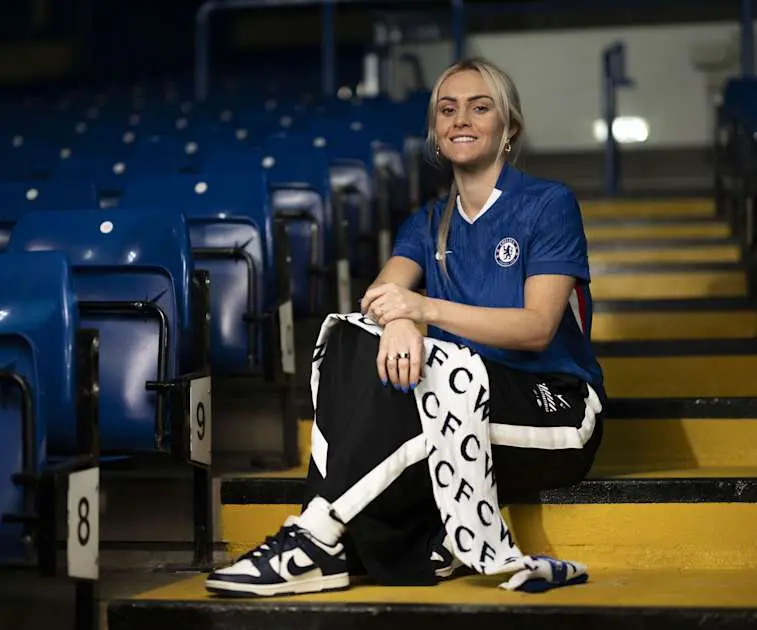
Chelsea and Australia international Ellie Carpenter made that gap explicit after a pre-season friendly against Sydney FC, telling ESPN it’s disappointing to see where the league is at in Australia now, especially coming off the back of the 2023 World Cup and the buzz that followed, and that the game there really needs more investment. Asked whether she might one day return home to play, Carpenter said finances would rule it out for now, though she hopes that changes and that ending her career in Australia becomes possible, a reminder that even players thriving at clubs with strong support structures, of the kind She Kicks covered in Chelsea’s fertility partnership, still face a genuinely difficult choice about where their futures lie.
No Settled Home For Australian Football
Football is Australia’s most-played sport, with 1.93 million participants reported by Football Australia in 2025, yet the country still has no permanent, dedicated headquarters for its national teams and development programmes. The Home of the Matildas facility opened in Melbourne in 2023, but it isn’t a permanent base for both senior national sides, and former Socceroos coach Graham Arnold described the federation as effectively homeless after his side had to prepare for World Cup qualifiers at a rugby league training centre.
Montemurro thinks the country’s size is part of the problem, suggesting Australia probably needs one or two geographical hubs, a northern touch point and a southern one, where development and youth squads can reconvene regularly. A couple of national base hubs, he believes, could meaningfully help youth development, a modest but pointed critique of infrastructure that hasn’t kept pace with participation numbers.
The World Cup Legacy Still Doing The Heavy Lifting
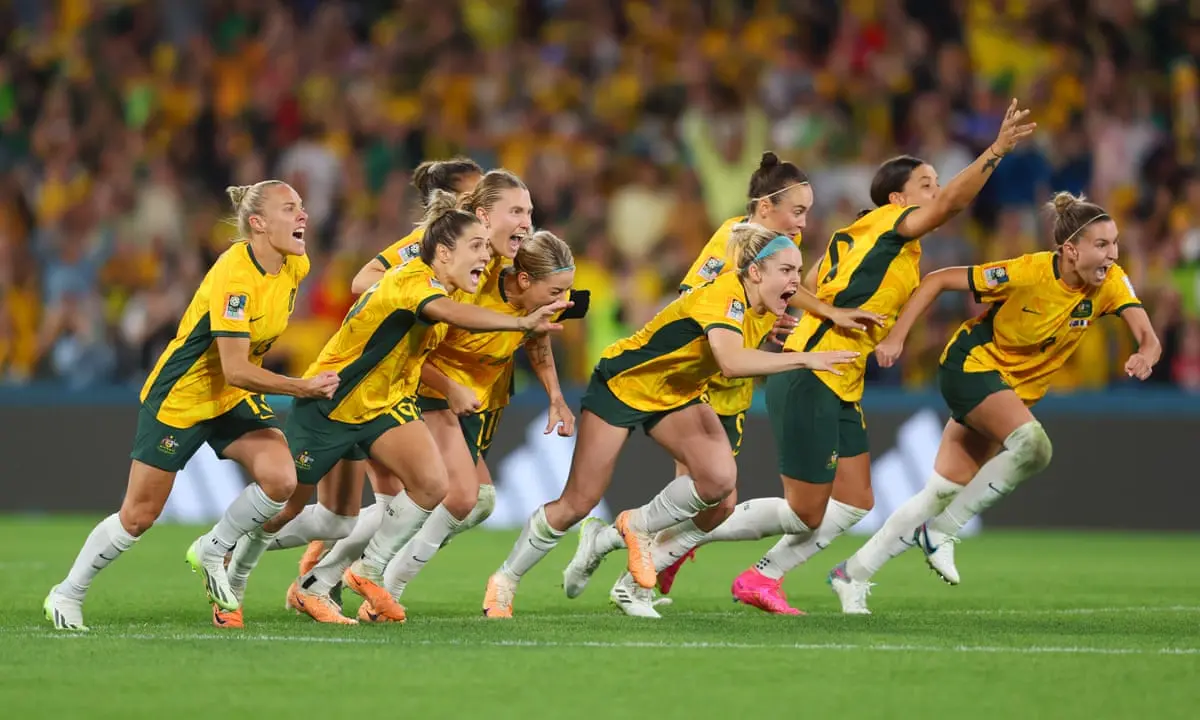
Australia’s co-hosting of the 2023 Women’s World Cup, and the Matildas’ run to a first-ever semi-final after beating France, remains the clearest turning point in how the sport is perceived at home and how its players are viewed abroad. Montemurro said the tournament changed perception of the football landscape, not just of the players but of coaches, administrators and the general standing of football in Australia, a shift in status that has plainly made it easier for clubs across the WSL, including sides building international rosters like Tottenham’s record signing of Alice Sombath, to see Australian talent as a serious and marketable proposition.
None of this is an accident. It’s a domestic league still finding its financial footing pushing its best players toward a division that pays better, plays more games and now offers a genuine second tier as an entry point.
The real test is whether Australia can build the wages and the infrastructure to keep the next generation home, or whether the WSL simply keeps getting stronger at its expense.
Source: BBC Sport