
Durham Women FC have warned they could cease operations at all levels within 21 days unless new investment or a buyer is found. That matters because one of the women’s game’s longest-running independent clubs is now openly saying it may not have the money required to keep competing in Barclays Women’s Super League 2.
According to the Sunderland Echo, the club has told staff and players that if no offer arrives inside that deadline, operations will stop. Durham’s own statement says prolonged talks with potential investors have fallen away in recent weeks, leaving the club without sufficient funds to operate in a fully compliant way for the 2026/27 season.
Durham have confirmed the danger publicly, and that alone makes this more than routine ownership noise
This is not vague speculation or the usual football rumour cycle around “seeking backing”. Durham Women have made the position explicit: they are seeking investment into the club or a complete purchase, and without it the club says it will shut down.
The wording matters. Clubs do not usually choose to put a 21-day countdown in public unless the pressure is real and immediate.
In their statement, the club said:
“Durham Women Football Club can today confirm that the club is seeking offers for investment into or the complete purchase of the football club. The club has been in prolonged talks with potential investors for several months but these have fallen away in recent weeks. Unfortunately, without this additional investment the club does not have sufficient funds to operate in a fully compliant way in the Barclays Women’s Super League 2 for the 2026/27 season.”
The club added:
“We have today informed staff and players that unless a buyer or investor comes forward within the next 21 days, the club will have to cease operations at all levels.”
That means the threat is not limited to the first team. Durham’s pathway, academy and wider player development work are wrapped up in this too, which makes the warning much bigger than a senior squad budget problem.
Founded in 2007 from a single under-10 girls grassroots side, Durham have grown into one of the most recognisable clubs in the second tier. They finished 10th in the 12-team division last season, with Neil Redfearn taking charge for the final six matches, but their importance to the game in the North East goes well beyond one league table.

They were, for a period, the only North East club playing in the WSL structure. They have twice reached the quarter-finals of both the Women’s FA Cup and the League Cup, and they were the first club in the region to secure a licence for a Professional Game Academy.
Last season, both Durham’s under-16 and under-21 sides reached national finals. Some of the players who were part of the original under-10 group remain in the first-team environment now, which tells you something about the continuity this club has managed to build.
This fits a wider pattern She Kicks has been tracking across the women’s game
Durham’s situation is specific, but it is not isolated. We have already looked at what financial instability can do lower down the pyramid in our coverage of the fight to save Plymouth Argyle Women, and at how uncertainty can drag on for players and staff in Canberra United’s unresolved future.
That fits a wider pattern She Kicks has been tracking. Women’s football keeps being told it is in a growth era, but growth without durable funding structures leaves clubs exposed the minute investor talks collapse or existing owners hit their limit.
Durham have long stood out because they did this without the backing of a men’s professional club. For years, that independence felt like a point of pride and proof that a women-led football project could build something substantial on its own terms.
Now it looks more like a structural vulnerability. As standards rise, compliance costs rise with them, and clubs operating without deeper institutional wealth are being asked to keep pace in an environment increasingly shaped by men’s-club resources, private capital or both.
That context matters for readers who follow the division closely. If you need a refresher on how the second tier sits in the wider system, our Women’s Championship guide maps out the level Durham have been competing in and why survival there is not simply a matter of turning up and being competitive on the pitch.

According to BBC Sport, the league has been in discussions with Durham since becoming aware of the issue and says it is working towards a positive solution while prioritising support for players and staff. That is welcome, but it does not change the basic fact that one of the division’s established clubs has reached this point at all.
Announcements matter. Systems matter more.
Fine in principle, but the harder question is why a club with Durham’s record has been left this exposed
It is fair enough for the club to seek fresh capital. It is fair enough for current majority shareholders to say they can no longer keep pace with the cost of a rapidly professionalising game. But the harder question is why that professionalisation continues to produce crisis points for clubs that have spent years doing the developmental work the sport claims to value.
Durham are not a vanity start-up. They are not a newly assembled project trying to buy relevance. They are nearly two decades into building girls’ and women’s football in their region.
In early 2025, there was already a significant ownership shift, with Durham University stepping aside and club directors alongside minority investors taking on a new structure. By mid-2025, public reporting was already indicating that additional backing was being sought to fund the club’s next phase and broader infrastructure ambitions, so this deadline has not appeared from nowhere.
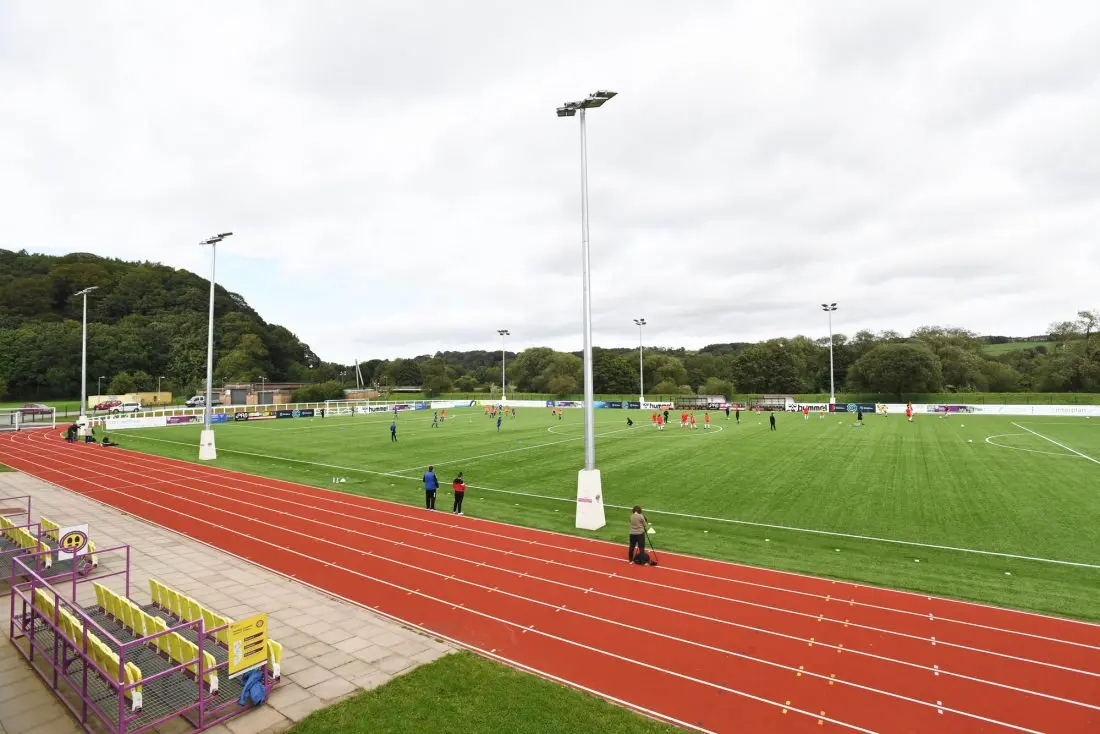
According to Bdaily, the club had been presenting itself as one of the last independent sides in the upper reaches of the English women’s game while actively talking to prospective investors. That framing made sense commercially, but it also revealed the bind: independence is admirable, yet the current system does not reliably protect it.
That is the harder truth here. The women’s pyramid still asks clubs to meet rising standards without guaranteeing a stable route to the revenue, infrastructure and institutional support needed to meet them.
So when Durham say the game’s development has outpaced what their majority shareholders can sustain, that should not be read as a private failure alone. It is also evidence of how precarious the model remains beneath the polished growth story.
What happens next will show whether the game wants independent clubs to survive or merely admires them after the fact
The immediate test is simple enough. Can Durham attract an investor or buyer inside the 21-day window, and can the league, local stakeholders or wider football network help create the conditions for that to happen?
If they can, Durham may yet come through this with a more secure ownership base and a future that protects not only the first team but the academy and development pathway underneath it. If they cannot, one of the clearest examples of sustained independent women’s football in England could disappear.
That would be a loss for the North East, where Durham have helped carry the regional game for years. It would also be a loss for the wider sport, because every time a club with history, identity and player development credibility reaches the brink, the same claim looks weaker: that growth at the top is naturally pulling the whole pyramid upwards.
What happens next will show whether women’s football has built real mechanisms for safeguarding clubs like Durham, or whether it still relies too heavily on goodwill, overwork and the hope that someone steps in just in time. Attention is easy to count. Loyalty is harder to build.
For now, Durham have asked interested parties to come forward urgently. The rest of the game should treat that not as a local inconvenience, but as a warning about what remains fragile in the system.
